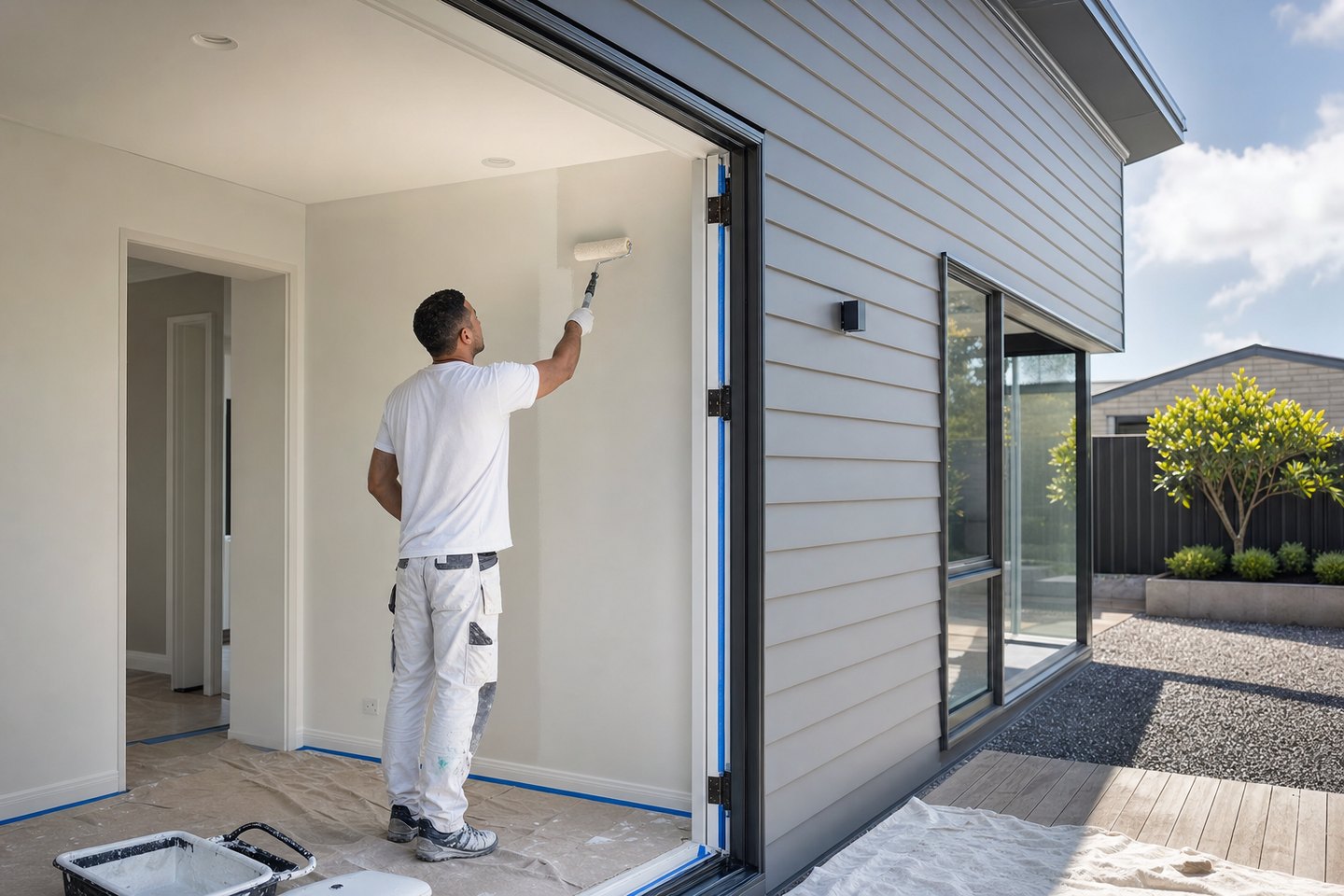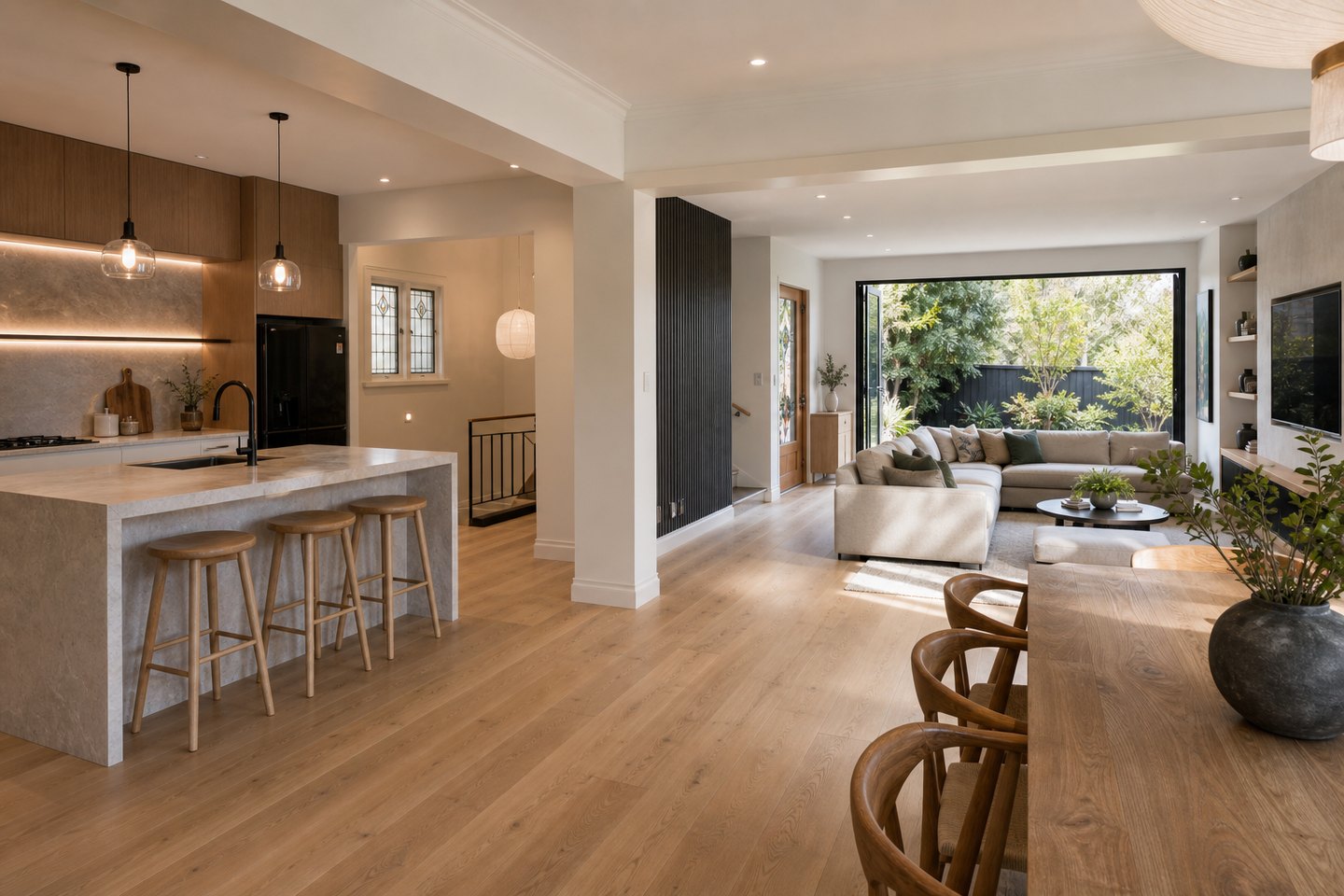

Good house painting is a sequence of decisions, not only the final colour. The condition of the substrate, level of preparation, coating system, access, weather, and coordination with other trades all influence the finish. Auckland homeowners can use this guide to prepare a clearer brief before requesting a painting quote.
Ask every painter to quote the same surfaces and preparation standard. A lower price may reflect fewer repairs, fewer coats, different products, or excluded access rather than better value.
Start clearly
Define the Auckland house painting scope room by room
List every surface to be painted rather than asking for a general interior or exterior price. For interiors, identify walls, ceilings, doors, frames, skirting, cabinetry, and feature areas. For exteriors, identify cladding, soffits, fascia, window frames, doors, trims, and other agreed surfaces.
Record whether the property is occupied, what furniture remains, whether colours are changing, and whether other renovation work will happen at the same time. Photos are useful for an initial conversation, but damaged coatings, moisture concerns, difficult access, and detailed trim are best assessed on site.
- List included rooms, elevations, and individual surfaces.
- Identify existing damage, stains, peeling, cracks, or unfinished repairs.
- Separate confirmed colours from selections still to be made.
- Confirm who moves furniture and removes fittings or window coverings.
- Note access restrictions, pets, tenants, neighbours, and parking.
Finish quality
Preparation determines what the new paint will reveal
Paint follows the surface beneath it. Dents, raised stopping, open cracks, loose coatings, contamination, and uneven repairs can remain visible after repainting. The quote should explain what cleaning, filling, sanding, sealing, priming, or GIB repair is included.
New plasterboard and repaired areas may need a different preparation sequence from previously painted surfaces. Glossy, stained, bare, or weathered materials can also require specific treatment. Agree on the expected finish before work starts, especially where strong natural or directional light makes surface variation easier to see.
If wall or ceiling repairs are substantial, Retrofix can coordinate GIB stopping with the painting sequence so responsibility for the finished surface remains clear.
Inside the home
Plan interior painting around use, light, and renovation sequencing
Interior paint choices should suit the room and the surface. Kitchens, bathrooms, hallways, bedrooms, and living areas have different cleaning, moisture, traffic, and appearance requirements. Sheen can affect both durability and how strongly surface imperfections show under light.
Complete dusty cutting, GIB work, stopping, and major repairs before final coats wherever possible. Coordinate flooring, cabinetry, electrical fittings, and other finishes so painted surfaces are protected and touch-ups are controlled. In occupied homes, agree on room access, daily clean-up, ventilation, and how belongings will be protected.
Outside the home
Exterior house painting needs suitable surfaces and conditions
Auckland exterior work must be planned around the substrate, access, moisture, exposure, and weather window. Surfaces should be appropriately prepared and sufficiently dry for the specified system. Peeling areas, failed sealants, corrosion, biological growth, and damaged materials may need attention before coating.
Discuss how the painter will reach upper areas, protect planting and paving, manage washing or preparation residue, and respond if conditions change. Coastal exposure, strong sun, sheltered damp areas, and different elevations can weather at different rates, so one maintenance interval does not suit every home.
Compare like with like
What an Auckland painting quote should explain
A useful painting quote lets you understand what will happen before the first coat is applied. Compare the written scope, not only the total. Product names alone are not enough if the surfaces, preparation, coat count, and exclusions differ.
- Included rooms, elevations, and surfaces
- Cleaning, filling, sanding, repairs, sealing, and priming
- Coating products, sheen, colours, and number of coats
- Scaffolding, height access, and protection assumptions
- Furniture, fittings, masking, and daily site arrangements
- Exclusions, optional work, variations, and completion checks
Surface condition, access, preparation, detail, coating system, and occupancy can change the labour and materials required. A site-specific scope is more reliable than a generic per-room or per-square-metre figure.
Delivery
A practical house painting process
- Scope reviewConfirm surfaces, condition, access, colours, products, and expected finish.
- ProtectionPlan masking, floor and furniture protection, access, and safe work areas.
- PreparationComplete the agreed cleaning, repairs, sanding, sealing, and priming.
- CoatingApply the specified system with suitable drying between stages.
- Quality reviewInspect completed surfaces under appropriate conditions and record finishing items.
- HandoverComplete agreed touch-ups, remove protection, and leave the work area tidy.
Common questions
House painting questions from Auckland homeowners
How much does house painting cost in Auckland?
The cost depends on surface area, condition, preparation, access, coating system, colour changes, trim detail, and whether the property is occupied. A site-specific scope is needed for a reliable quote.
What should be included in an Auckland painting quote?
The quote should identify the surfaces, preparation, primer or sealer, coating system, number of coats, access assumptions, protection, exclusions, and completion expectations.
Can a painter cover damaged walls without repairs?
Paint can change colour and sheen, but it does not remove dents, cracks, loose coatings, or poor stopping. The required repair and preparation standard should be agreed before painting begins.
How often should an Auckland exterior be repainted?
There is no single interval for every home. Substrate, previous coating system, preparation quality, sun, moisture, coastal exposure, maintenance, and elevation all affect performance. Inspect coatings regularly and address deterioration before it exposes the underlying material.
This guide is general preparation information. Product suitability, repairs, access, safety, and weather requirements should be confirmed for the actual property and coating system.
Next steps